Strong Bones, Better Lives: Exercise and Osteoporosis
Osteoporosis—the gradual decline of bone density—is one of the most significant threats to independence among older adults. Affecting millions of seniors nationwide, this condition silently weakens the skeletal system, contributing to chronic back pain, spinal compression, and fractures. Among the most serious consequences are hip fractures, which can be life-altering.
Genetics plays a role in bone health, but the choices we make throughout life matter too. Bone density is largely established during youth, making this an important conversation to have across generations. A calcium-rich diet, adequate vitamin D intake, and regular physical activity during childhood and young adulthood lay the foundation for a stronger skeleton later in life. Young people who stay active tend to reach higher peak bone mass, essentially banking bone strength for decades ahead.
The good news? Exercise supports bone health at every stage of life. Here’s what you should know about staying active with osteoporosis.
Why staying active matters
Many people with osteoporosis pull back from physical activity out of fear of falling. This caution is understandable, but counterproductive. Inactivity actually increases fall risk by eroding muscle strength, diminishing balance, and accelerating bone loss. Guided, appropriate exercise is one of the most effective tools for managing osteoporosis safely.
Four Categories of Bone-Friendly Exercise
Weight-bearing movement: Activities such as walking, dancing, or using an elliptical machine require the body to work against gravity while upright. This mechanical load sends signals to bone cells to maintain and even build density. As the National Institutes of Health notes, muscular pull reminds bone cells to preserve tissue strength.
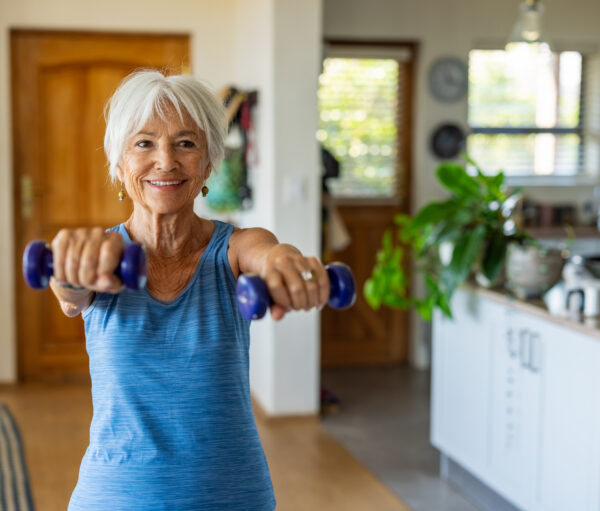
Resistance and strength training: Lifting free weights, using resistance bands, or working with weight machines builds both muscle and bone. Stronger muscles act as a protective framework around the skeleton, reducing fracture risk and improving posture—both critical considerations for those managing bone loss.
Balance and stability work: Since osteoporosis dramatically increases the consequences of a fall, balance training is a cornerstone of any bone-health fitness plan. Practices such as tai chi or targeted balance exercises sharpen proprioception (the body’s ability to understand its own position and movement) and coordination, helping prevent the stumbles that lead to serious injury.
Flexibility and mobility training: Stretching routines and certain yoga practices improve range of motion and muscle function, further lowering fall risk and keeping the body moving efficiently as we age.
Safety first
Not every exercise is appropriate for every person with osteoporosis. Consult a physician before starting any new fitness routine. Low-impact options such as walking or elliptical training are generally preferable to high-impact activities such as running or aerobics. Some yoga poses place unsafe stress on the spine. Activities with a higher fall risk, including cycling and skiing, are typically discouraged. A physical therapist can offer personalized guidance on safe movement mechanics and help design a program that protects while it strengthens.
This article is not intended to replace the advice of your healthcare provider. Talk to your doctor about managing osteoporosis, and about exercise activities that are safe for you.
Source: IlluminAge